Abel Tasman National Park (Wilsons Abel Tasman)
It’s 33 years since I first took a Wilsons Abel Tasman boat from Kaiteriteri into Awaroa armed with enthusiasm and my boyfriend’s tent. John Wilson was the skipper. He was the embodiment of a stern man of the sea, advising us when to jump onto the beach to avoid getting our boots wet.
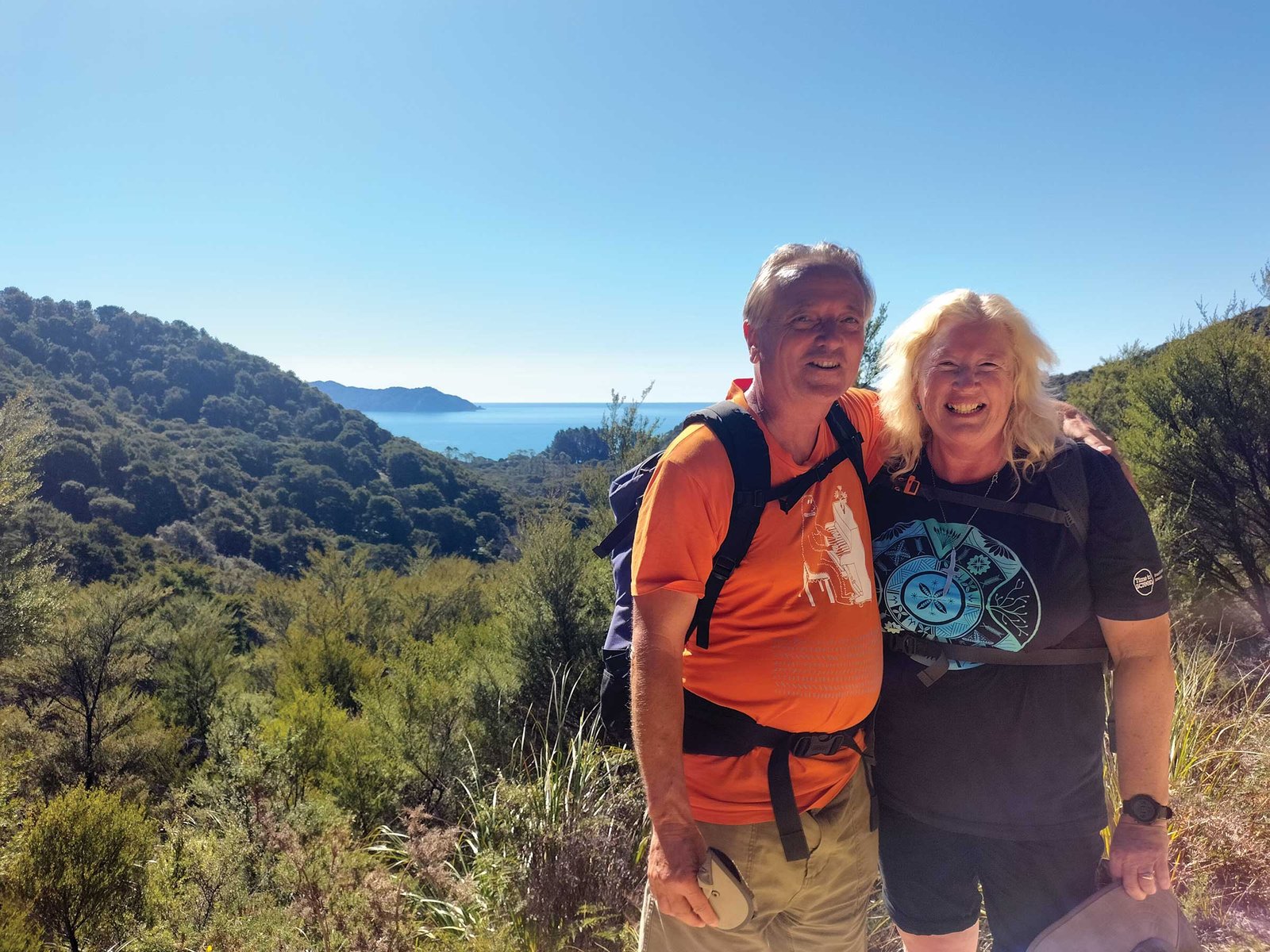
Now, in my mid-50s and with my 69-year old husband Clem with me, I’ve taken a more luxurious option of a three-day walking and kayaking adventure with Wilsons, staying at their two beachfront lodges – Meadowbank Homestead in Awaroa and Torrent Bay Lodge.
We had prepared for our adventures with a bit of uphill walking but kayaking in the Park would be new for us both. I had some pre-trip nervousness about being in a kayak, but I can honestly say I would not have missed that aspect of our trip for the world. It was magical.
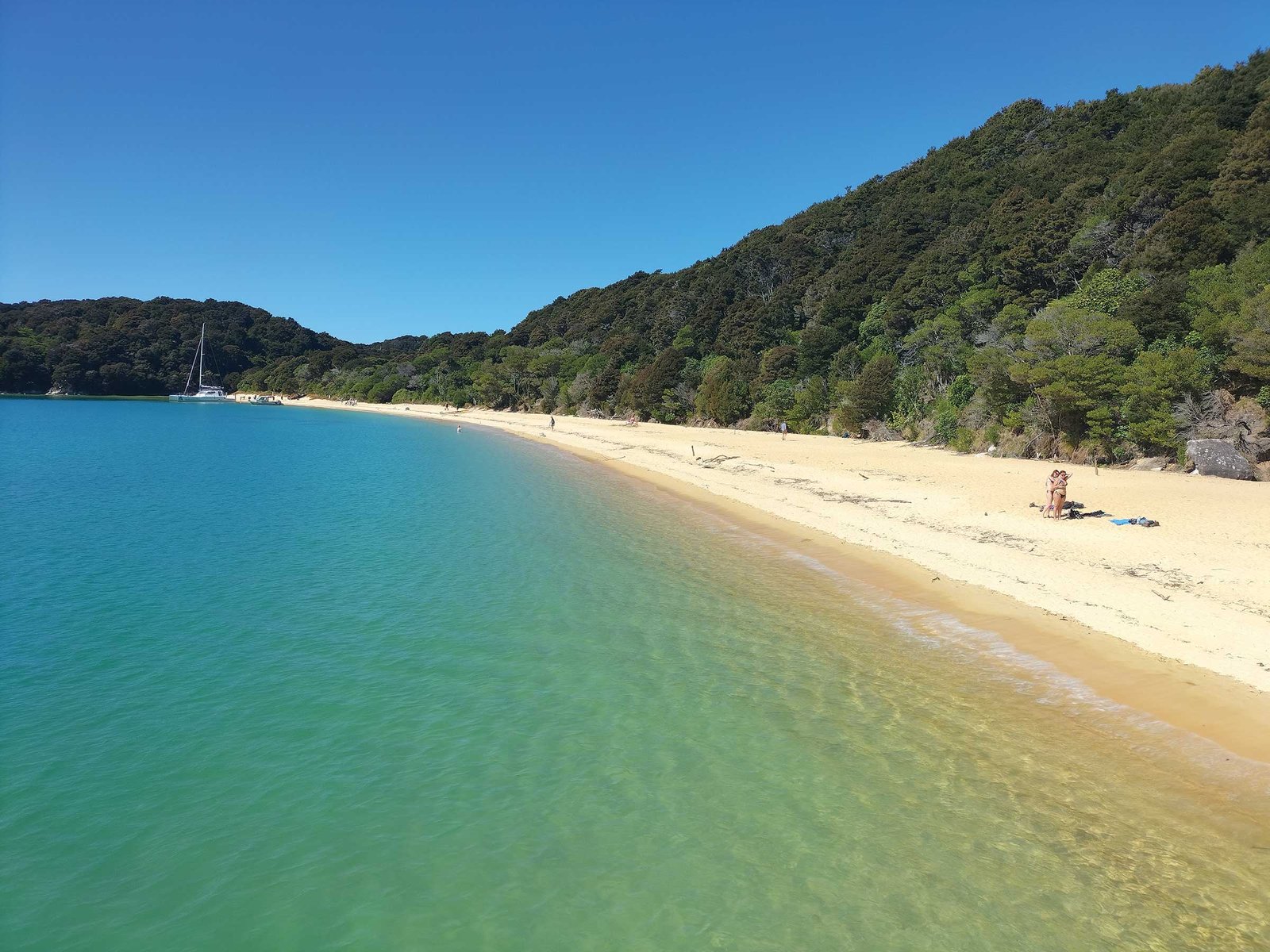
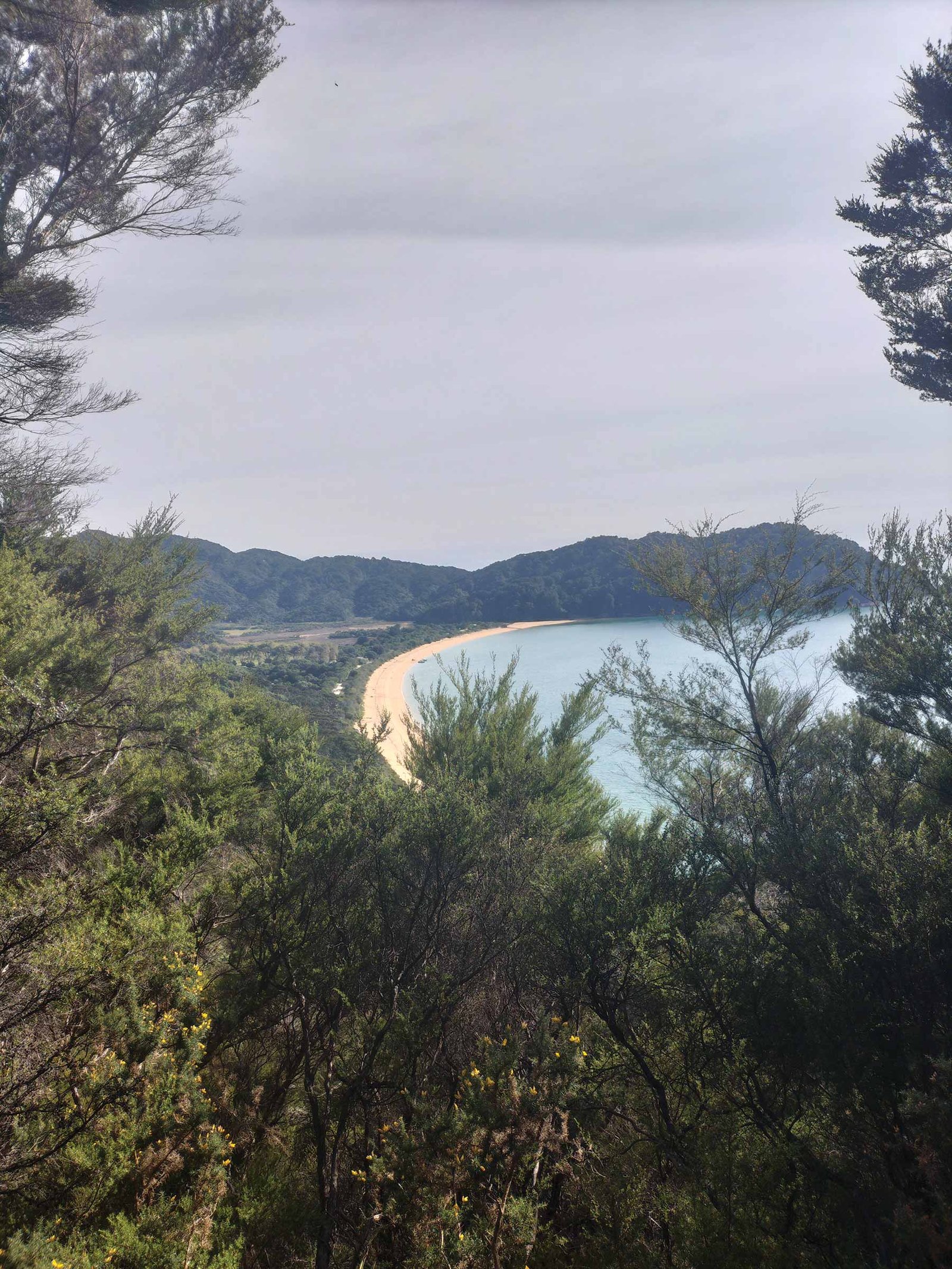
Anchorage Beach
Nine generations of hosting in the Park
The Wilson family have a nine-generation connection to the Abel Tasman National Park. Their two lodges are on the site of their ancestors’ original family homestead (Meadowbank) and an expanded and upgraded version of their family holiday home (Torrent Bay). Their generations of experience welcoming people into the Park (for more than 140 years in fact!) shows. They run a well-oiled machine with special touches that are memorable from the outset.
We were picked up in Nelson by one of the Wilsons’ cousins Graham for our trip to Motueka for our briefing at the main office. We repacked the bulk of our gear into the Wilsons’ overnight bags provided, and received the first of our delicious packed lunches, complete with a Wilsons Abel Tasman stainless steel mug.
The mug and overnight bag are keepsakes from the trip. The mug played a key part in reducing disposable cup use on the boat and in the Park during our adventure, while the bag kept the transfer of belongings to guests’ rooms each night manageable for staff.
Our young guides – pictures of health and vitality and walking advertisements for the benefits of spending time in the Park in their own right – briefed us on our first day of activities.
We were immediately working as a team with each of us carrying someone’s/anyone’s black bag to the bus for loading and climbing on board for the short trip to Kaiteriteri, the departure point for our boat journey to Onetahuti.
En route we had a quick stop to pick up a few passengers who had parked their cars in Riwaka where John Wilson keeps an eye on them from his nearby property. John himself was on hand, still an enthusiastic host, hopping on the bus to greet us and wish us all the best for our trip.
Time and tides
Tides influence the itinerary because crossing to Awaroa from the north can only be done safely an hour or so either side of low tide. This meant that we would start at Onetahuti and walk north to Meadowbank Homestead rather that starting in Totaranui and walking south.
This was a little gift from the Gods in several respects; it’s an easier and slightly shorter walk, which meant more time to enjoy the Lodge before dinner, and it also meant we were on hand to witness one of the most beautiful sights I’ve seen during my many trips to the Park.
Several years ago Onetahuti benefited from the installation of a beautiful bridge and walkway. While crossing the bridge we spotted a large school of small fish on either side being chased by an extremely persistent cormorant. The water was so clear that we could watch the bird underwater in pursuit, darting in all directions, with the fish evading capture for several minutes. Finally the bird secured a catch with lots of verbal encouragement from us as mesmerised spectators.
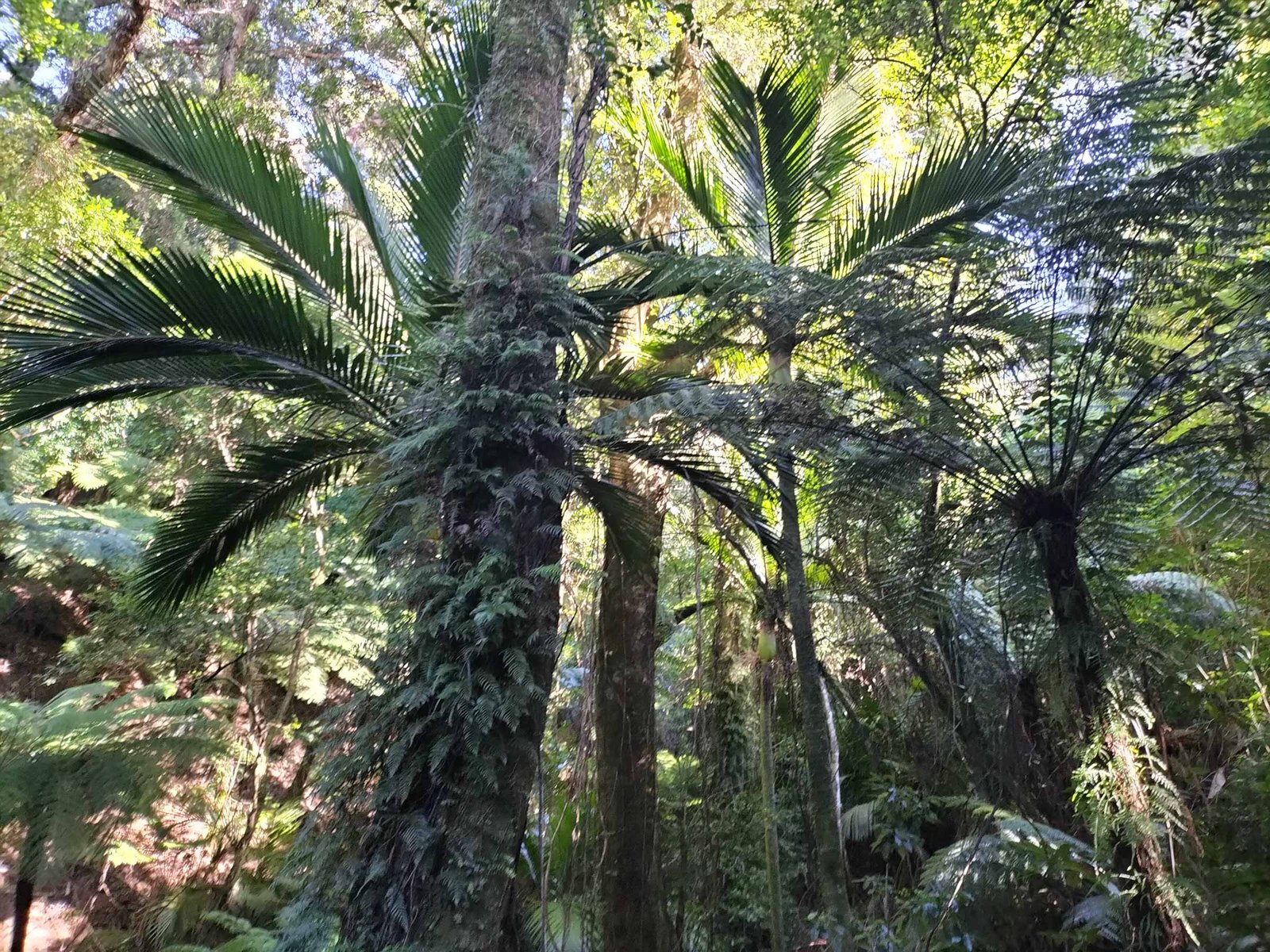
Abel Tasman Park native bush
The guided experience
Walking to Onetahuti at a leisurely pace in the afternoon sun there was plenty of opportunity for the photographers in our group to capture views, flora, and fauna. Our 25-year-old guide Rob has developed a passion for botany since starting to work for Wilsons. Having being trained by a fellow guide and going on to acquire more knowledge once the spark was lit, he had plenty of stories to share. I learnt a great deal – seeing his favourite moss (which grows in only three spots in the park) and learning about the long and determined process by which epiphytes grow on their host tree.
Our group, which ranged in age from 20 to 75, walked companionably together chatting and in silence as we enjoyed the birdsong.
Birdsong was a standout aspect of the journey as a whole. There is simply so much more of it than there was in the early 1990s. Dedicated conservation work over decades has paid off and it is wonderful to hear and see the native birds. We were visited by pīwakawaka, robins, tūī and korimako (bellbirds) during our first walk and even more special bird encounters were still to come.
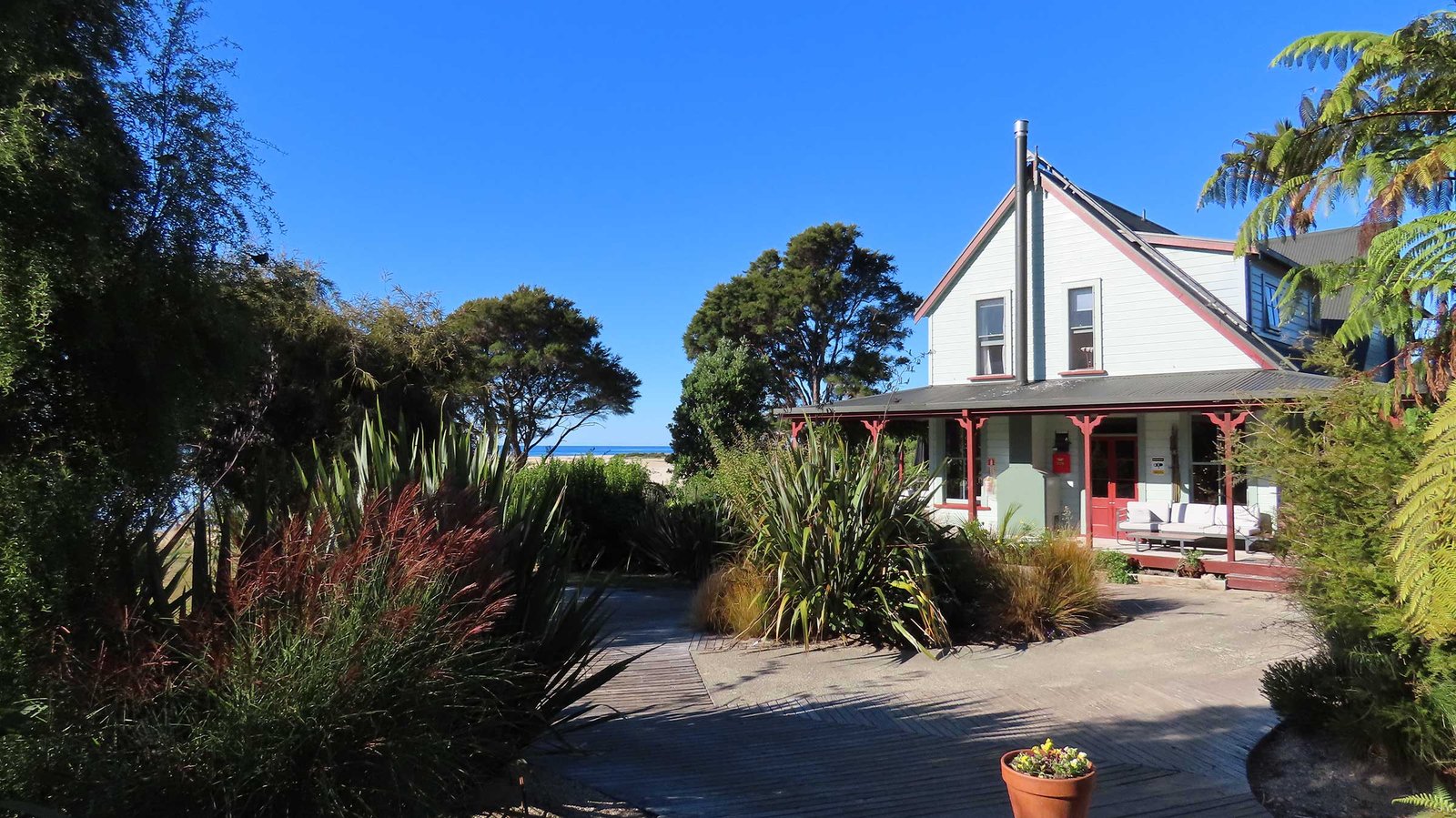
Meadowbank Homestead
Guests of the family
By the time we had walked around the edge of the estuary and up the steps to Meadowbank Homestead we were all pleased to stop and enjoy the beautiful surroundings. What a luxury to arrive to a hot shower, our bags in our ensuite rooms, and dinner being prepared.
We relaxed on the grass lawn in front of the Meadowbank Homestead watching other walkers make their way across the estuary. Chatting to other members of the group we got to know a retired couple from Christchurch keen to challenge themselves, a solo traveller from Auckland escaping from work pressures, a young couple celebrating their first anniversary, and friends and neighbours from Melbourne who are serial outdoor adventurers. There were parents from the USA enjoying time away with their university-aged daughters, and a Swiss man taking a sabbatical in NZ and Japan. It was an eclectic group sharing the joy of being in the moment, in nature, and in the Park.
The Wilsons’ family history and long connection to the Park are evident in the names of each room at the lodge. The artefacts and objects in the rooms themselves evoke earlier times – including family photos on the walls. In our bathroom, a well-used leather strop hung on the wall. It had clearly sharpened many knives in its day. Unlike other lodge environments, this presence of family connection to place makes it feel like you are being personally hosted by the Wilsons.
Shared experiences
After our busy day we sat down to an entree of mozzarella, tomato and freshly baked focaccia bread already placed on the long table. Each of the menu choices was delicious and we were able to purchase a range of local wines to complement the food.
Conversation flowed easily amongst the guests. There’s nothing like having had a shared experience in the outdoors to bring people together. We quickly found our conversations going well beyond surface level as we really got to know one another.
Soon after dinner we headed to bed to prepare for a big second day. We couldn’t resist getting up again at 11pm to look at the night sky – the Milky Way dense with stars – spectacular without the light levels of an urban environment. There was something both elemental and timeless about the combination of that sight above us and the sound of the waves on the beach.
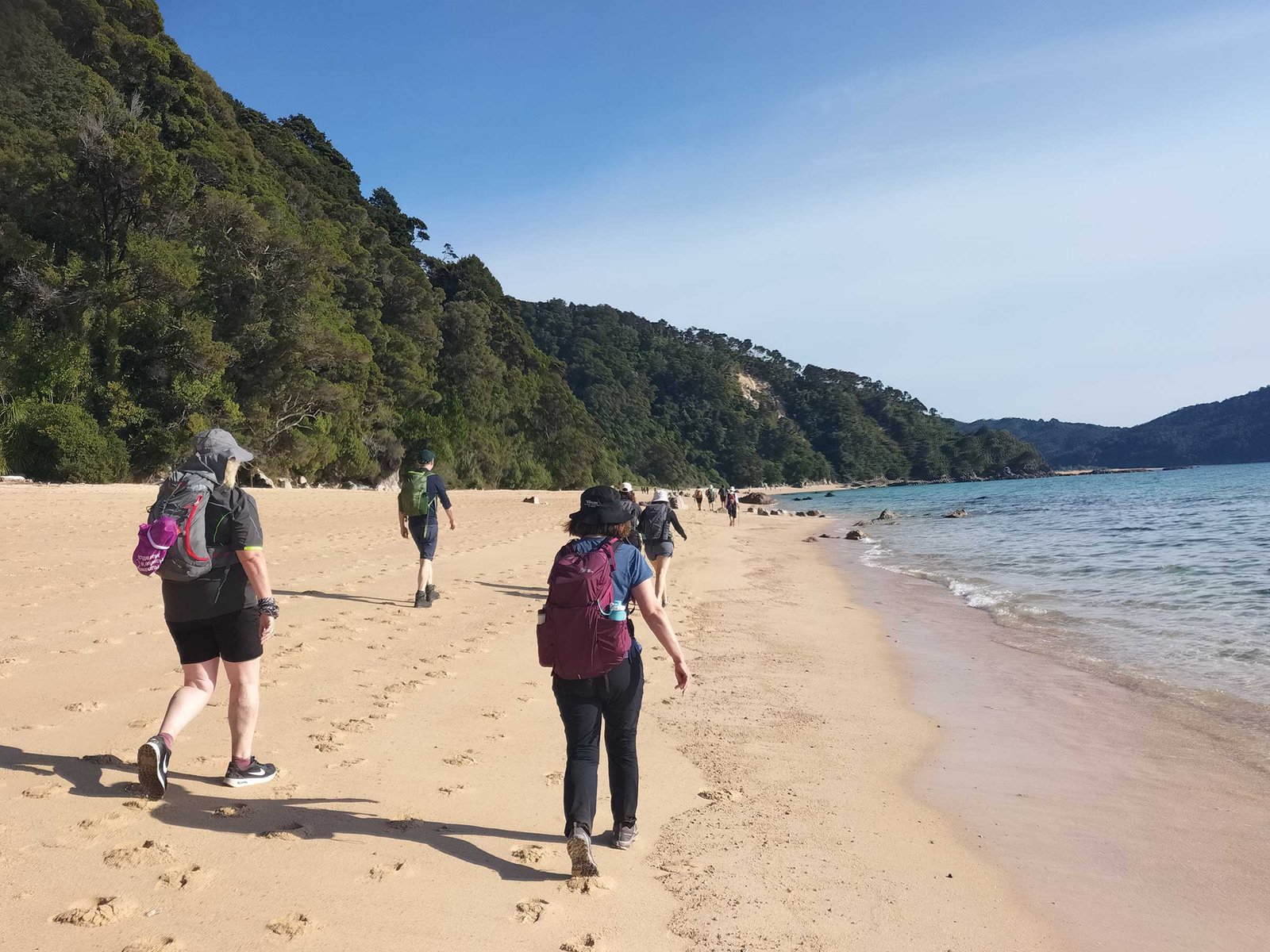 Goat Bay
Flora and fauna
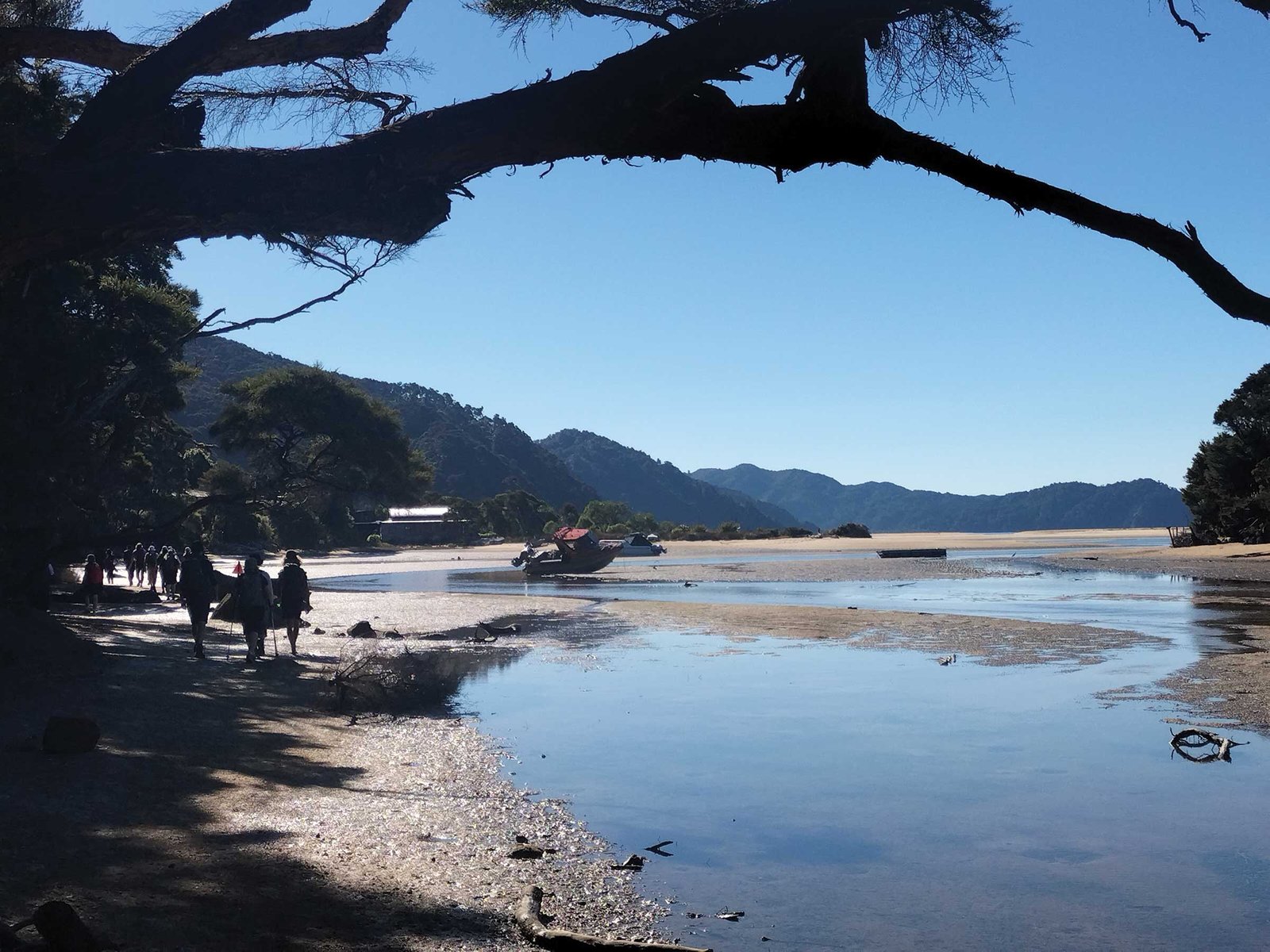
Due to the tides our itinerary was slightly amended so the next day began with a walk across the Awaroa Inlet at low tide. We were treated to the sight of several Royal Spoonbills and the very elegant Kōtuku (white heron). We stopped to admire them and to listen to our guide Jack share his knowledge of the birds and some of the history of the area.
After changing our shoes for the rest of the walk to Tōtaranui we continued north to connect with our boat. We passed a beautiful Northern Rātā, possibly as old as the first human settlement in the area, and had the chance to try a sweet Kahikatea berry at the Waiharakeke campsite.
Just south of Tōtaranui we came across the poignant sight of a juvenile humpback whale that had washed up on the beach. It was moving to be in the presence of the whale which local iwi had already visited and blessed with a karakia (prayer). Although clearly not an adult whale it was still a large presence on the beach.
After paying our respects, we met the boat in Tōtaranui for the trip back to Onetahuti Beach where we would start our kayak leg. Those in our party who weren’t kayaking continued on foot from Onehtahuti via Bark Bay to Torrent Bay Lodge.
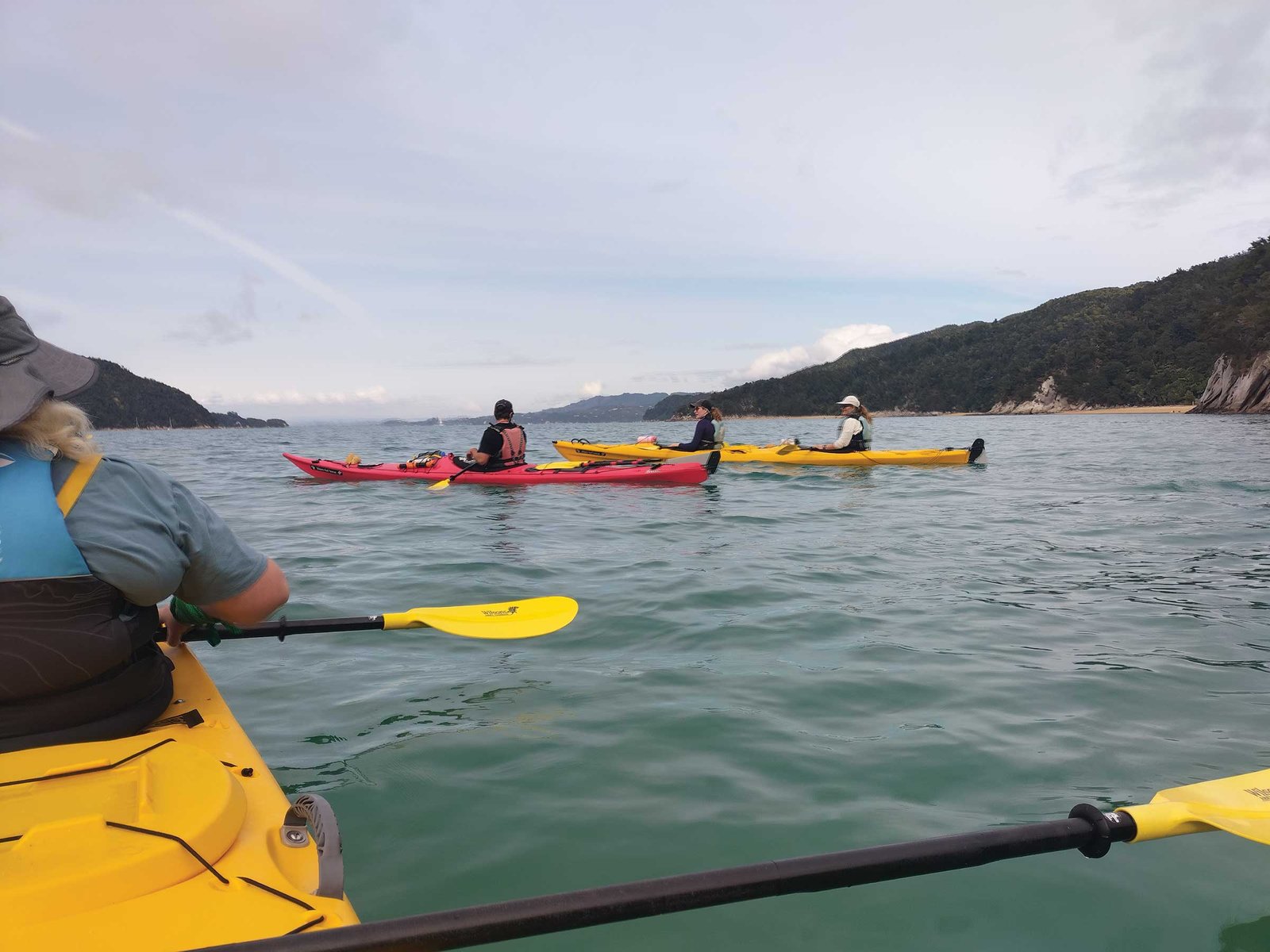
Kayaking for beginners
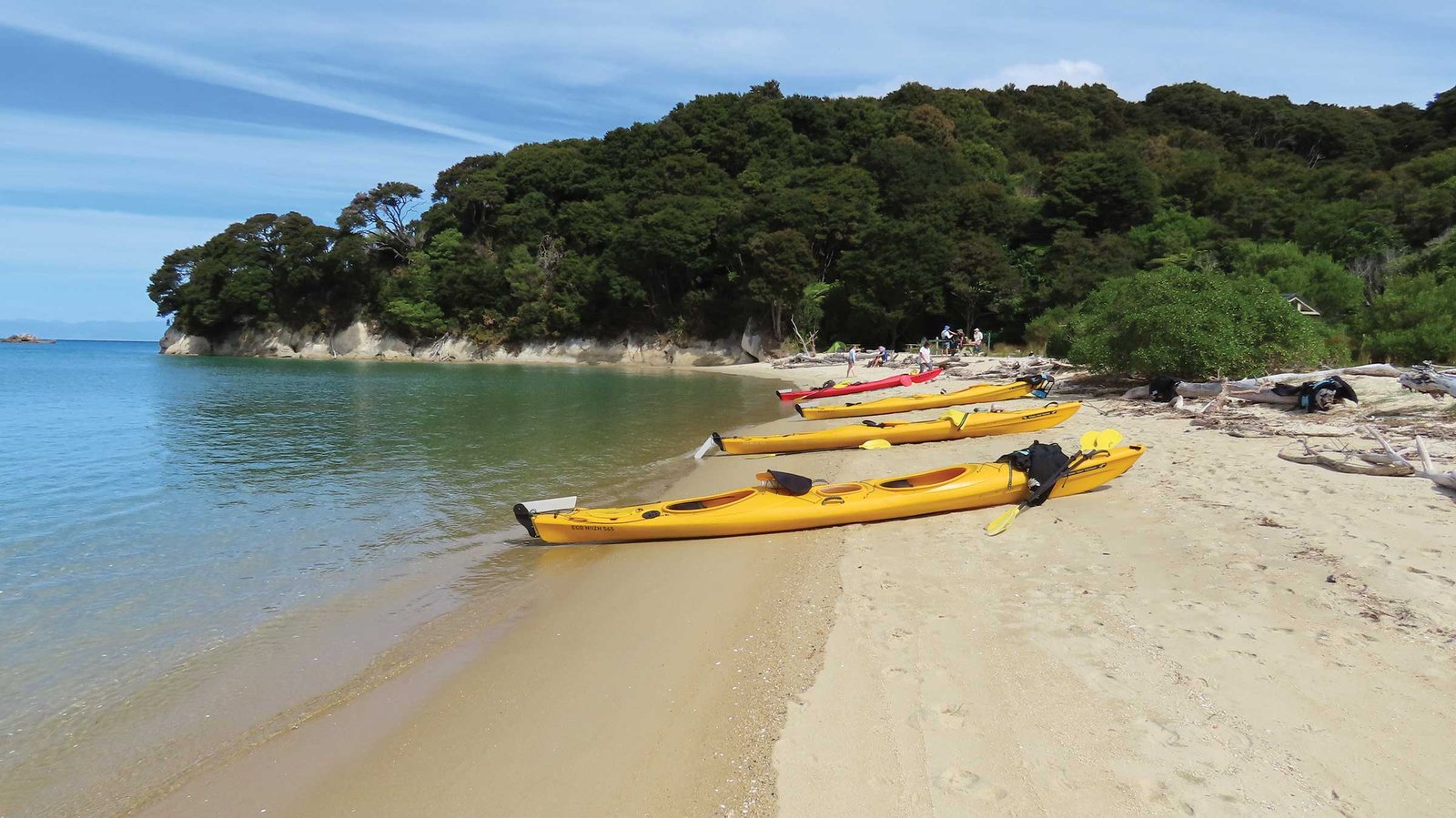
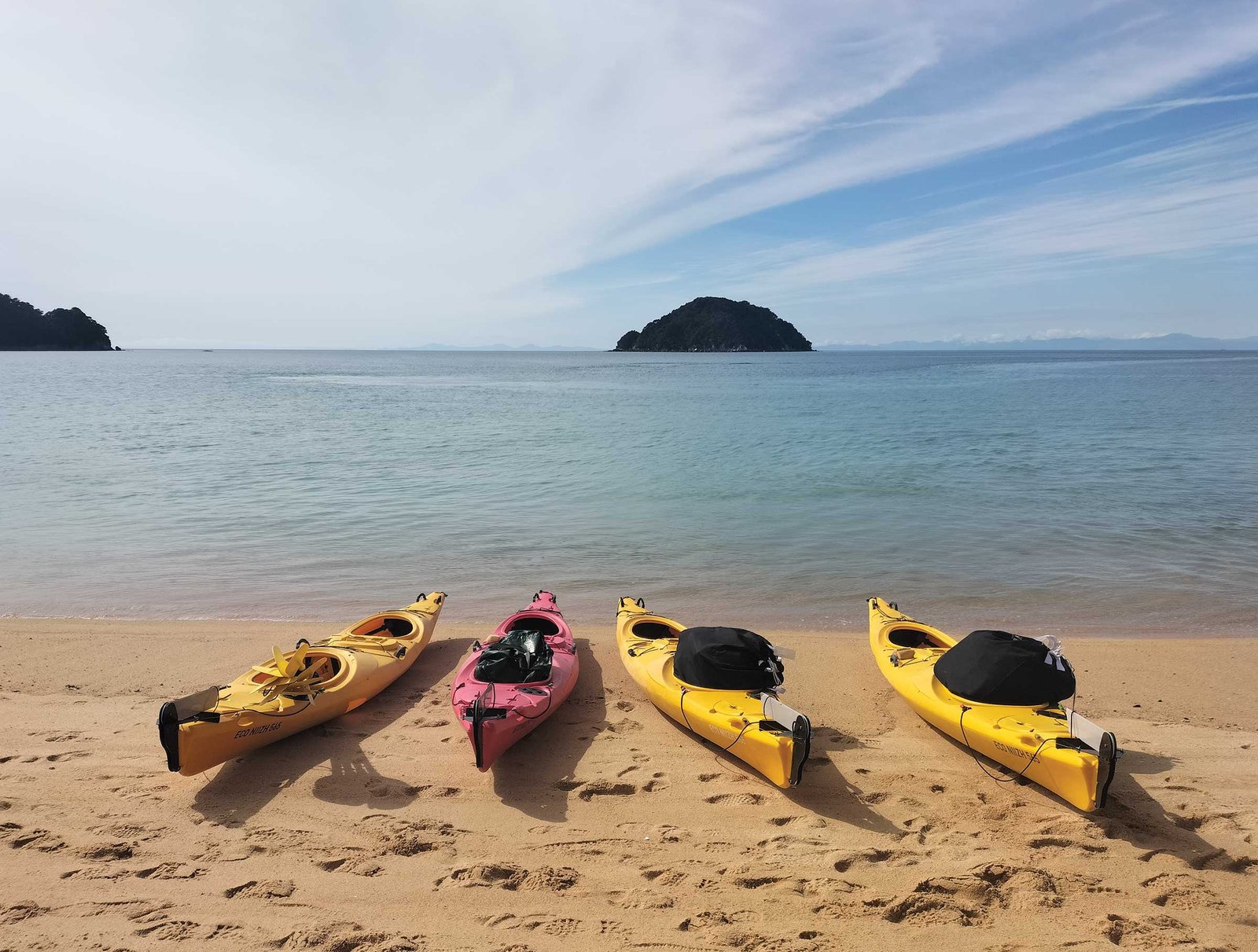
After a calm and considered briefing from our guide Jack, we donned our gear, and set ourselves up in our kayaks. I deferred steering duties to my husband, and took the front spot. This meant less leg room but the first view of what was ahead.
And then we were off, nervously at first in my case, but buoyed by the excitement of some of our fellow kayakers, two women in their early 20s travelling with their parents and a solo traveller.
After about 15 minutes I settled into the rhythm of it and applied myself to playing my part in keeping the kayak moving forward. It was beautiful to be at sea level and to observe the coastline from that vantage point.
Being in a kayak gave us easy access to parts of the Park I had never seen before during my many visits on foot, such as estuarine areas behind the beaches, and beaches that are only accessible by water as they are not connected to the main coastal walking track.
A particularly special moment was when we kayaked into the estuary behind Mosquito Bay. No-one said a word but the power of the place silenced us all and sat for several minutes in our kayaks just listening to the birdsong.
A bit further on, we kayaked through a gap only accessible at high tide towards the Falls River swing bridge only to see our walking group friends crossing the bridge at the exact same time.
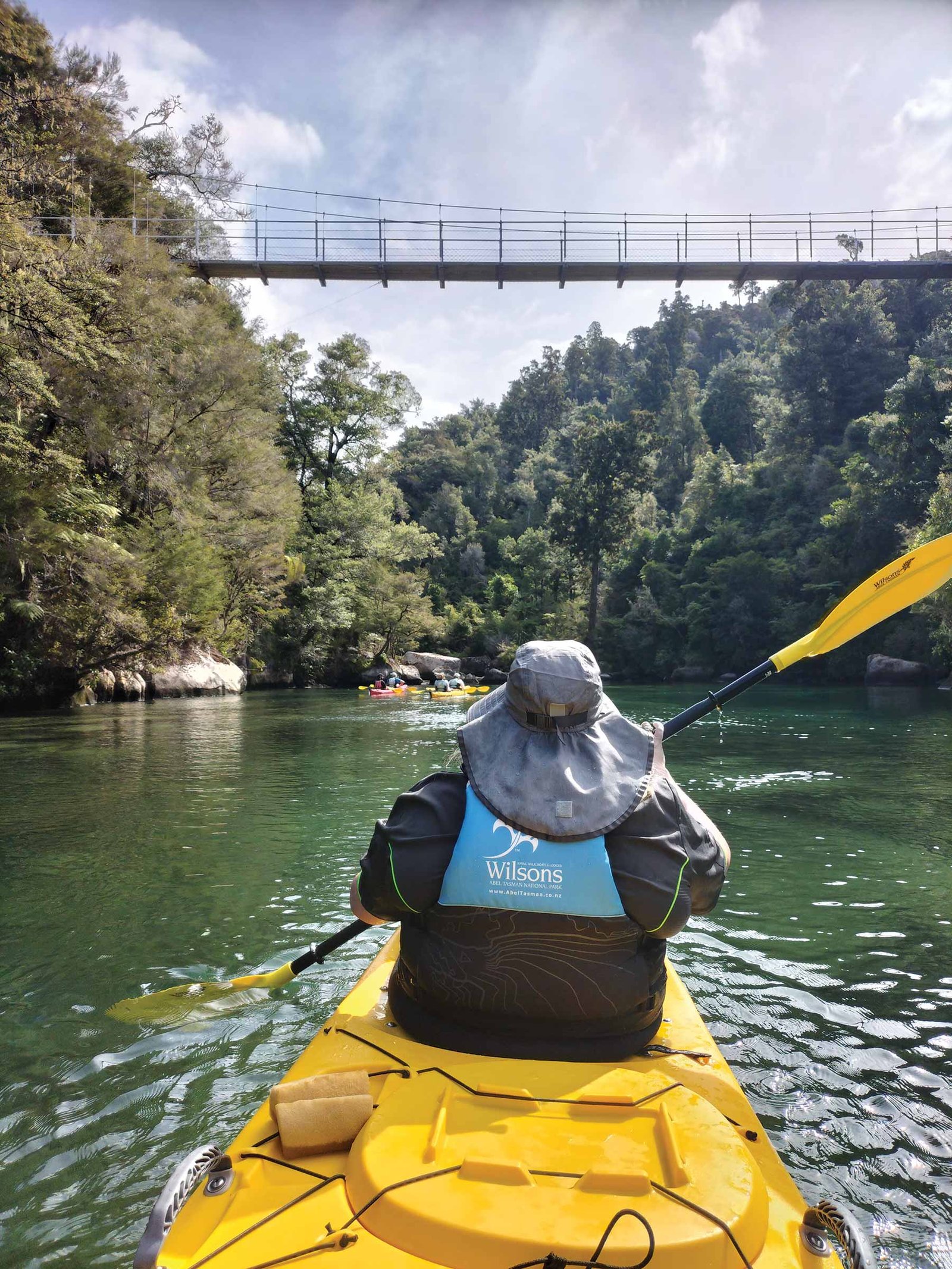 Falls River swing bridge
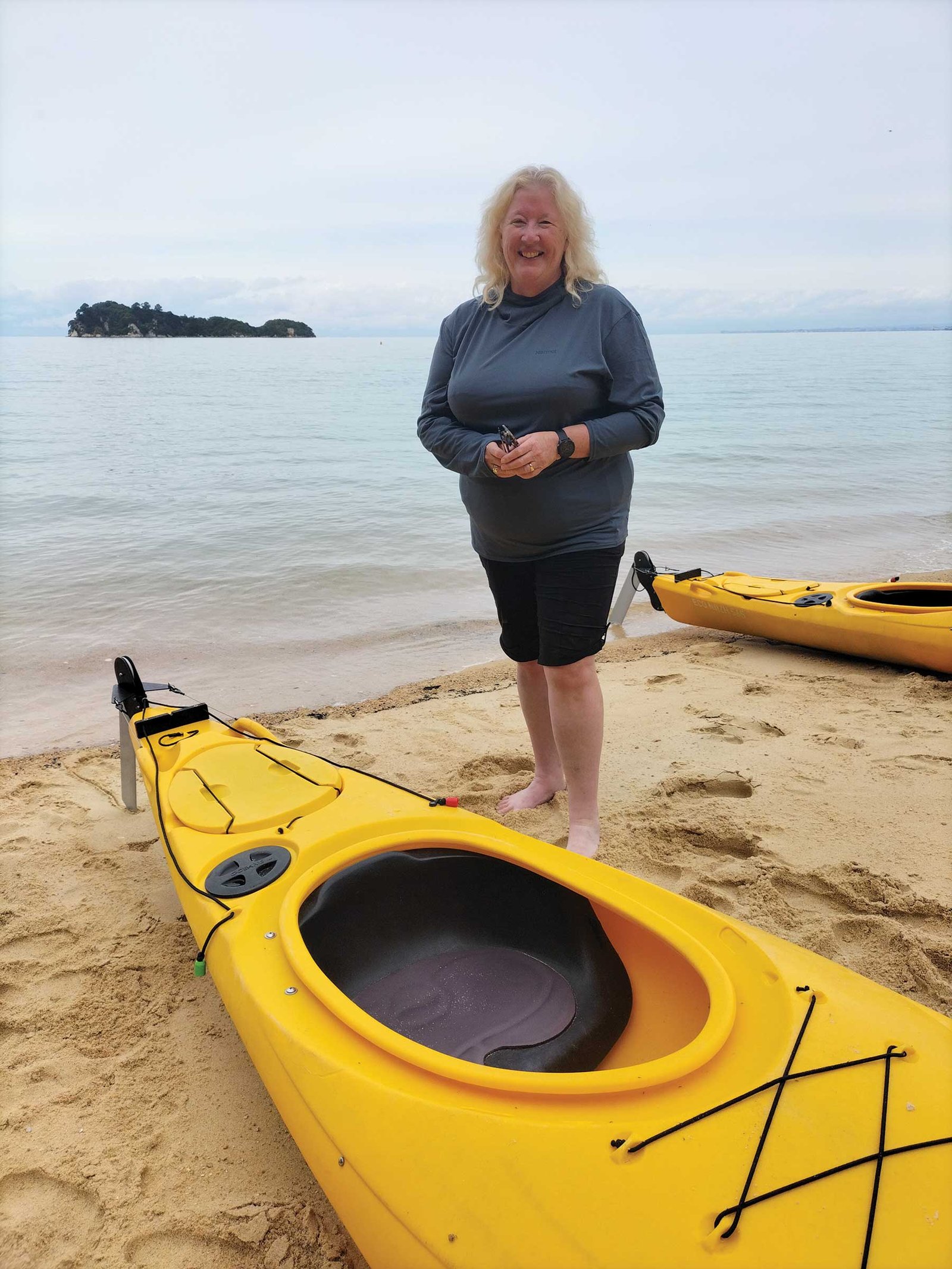
With a bit more wind the sea conditions got a little choppier but we were up to the challenge of the last leg from Sandfly Bay to Torrent Bay. After stretching our legs briefly we worked together to carry the kayaks up the beach before heading to our rooms for a welcome shower.
Once again drinks on the deck and a lovely dinner awaited us. This time between the main course and dessert everyone went outside to admire the sunset hues in the sky. There is a particular quality of light at that time of day which made everyone seem bathed in a rosy glow – or perhaps it was just the rejuvenating effect of having spent a day in the outdoors and the radiance that comes from enjoying excellent food in great company.
There was no stargazing on the second night, just rest and recuperation ready for a big final day of kayaking.
Perfect autumn conditions
After a second breakfast of champions, featuring an omelette, bacon, crispy hash brown and a selection of continental breakfast options, we carried the kayaks down to the water’s edge in the morning light. We couldn’t have wished for better conditions to be out on the sea. As we got into our kayaks we heard some of the Kākā that have recently been released in the Park. Although they were released in Bark Bay they have relocated themselves to Torrent Bay where they appear to prefer the conditions. As we left the bay the Kākā flew overhead heading south, their dark silhouettes against the pale morning sky. It felt like a blessing for the day ahead.
This second day of kayaking was nothing short of spectacular. Staying close to the shoreline and with the tide in our favour we were able to kayak through granite rock formations touching the side as we made our way through. We stopped at Watering Cove, visited by D’Urville for the very same purpose as ours all those hundreds of years ago.
We headed out to Adele Island to see the young seal pups before making our way around the island a little to sit in our kayaks and listen to the loud and varied birdsong of the predator-controlled environment. It was amplified by the natural amphitheatre of the small bay and our guide told us that in D’Urville’s time they had shifted anchorage further offshore because the birdsong had woken everyone up too early.
The sea was limpid and glass-like as we kayaked from Adele Island to Apple Tree Bay for lunch. Still seas and an overcast sky raised hopes that we might spot some dolphins but unfortunately it was not to be. This weather and sea conditions were a reminder that the shoulder seasons in the Park are very beautiful – less wind, settled weather – perfect. I even had a swim in the sea during our lunch stop, not bad for the the end of March!
The final leg of our journey took us into Mārahau, again from a completely different perspective. With just enough water underneath us we kayaked across the inlet and up a river. The gentle swoosh across the sand to come to stop was the perfect natural punctuation point for day that had been all about being at peace with our surroundings.
Farewells and returning
Back at the bus parked nearby the rest of our group were waiting, having enjoyed an hour at the Park Cafe at the end of their walk. After a short ride back to Wilsons Abel Tasman’s Motueka base there were heartfelt farewells, hugs, and exchanging of contact details before the bus dropped our new friends off at their respective Nelson accommodation.
We had only had three days and two nights in each other’s company but we all felt we had shared something truly special and everyone felt the sense of contentment of having risen to the occasion of their Abel Tasman Park adventure.
Back at the Meadowbank Homestead during dinner on the first night the Swiss traveller in our group had asked me why I kept coming back to the Park when I live nearby. Now I had my answer. Because every time in the Park is different. Each time it shows me another aspect of itself. Every season has its gifts – in the Park and in life. I will always keep coming back.
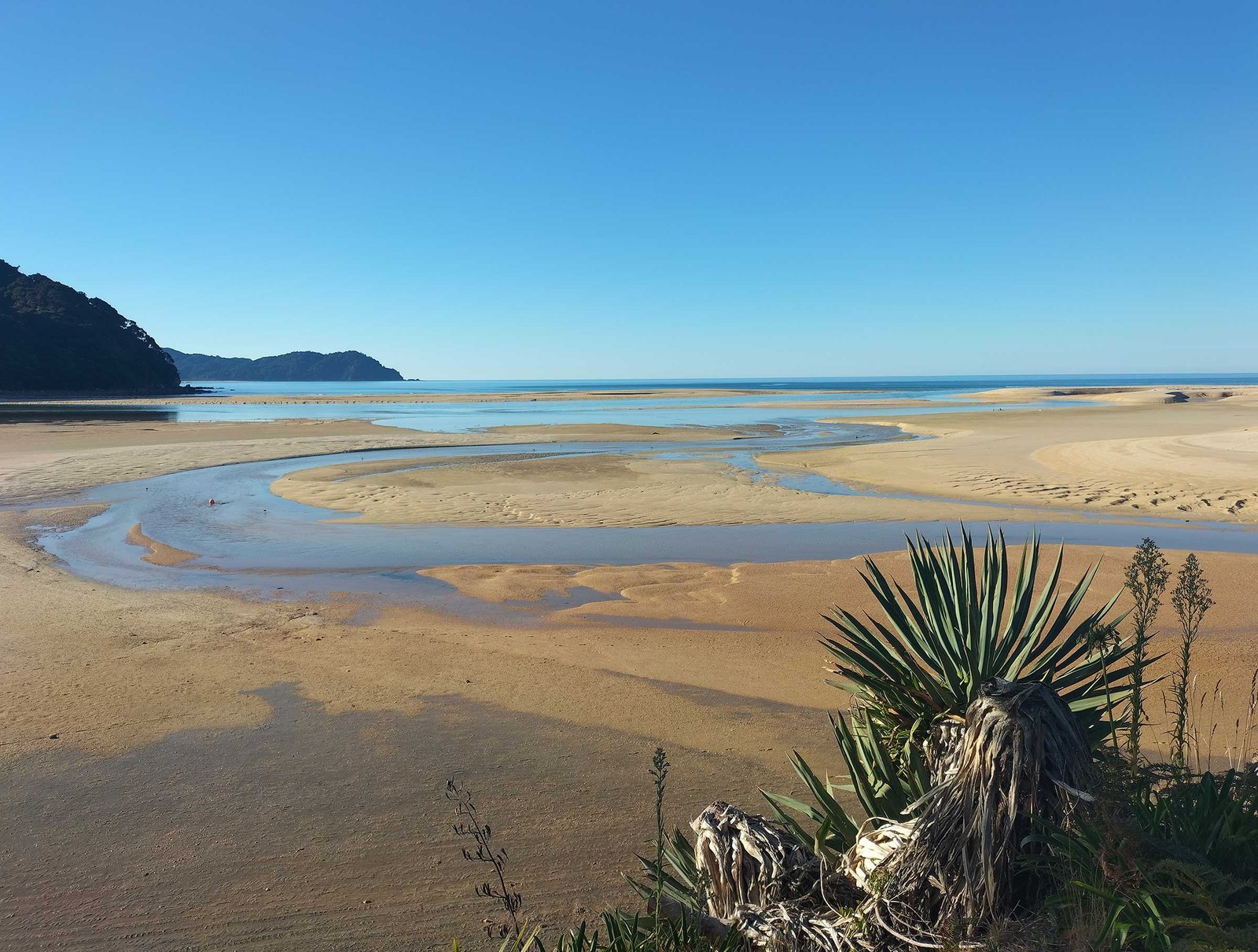 View from Meadowbank Homestead
Click on below images to enlarge